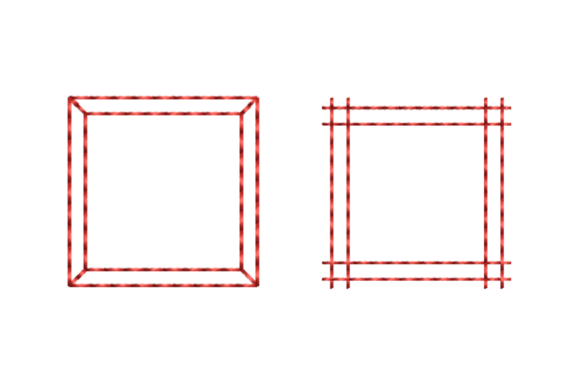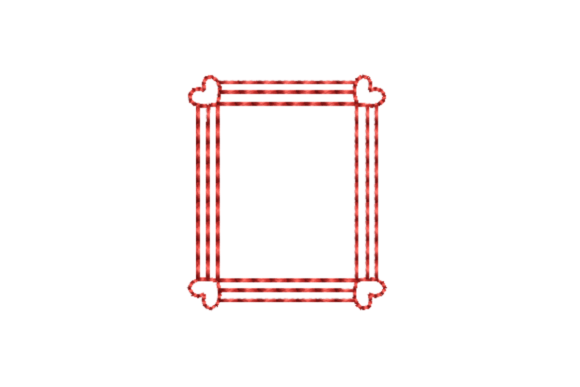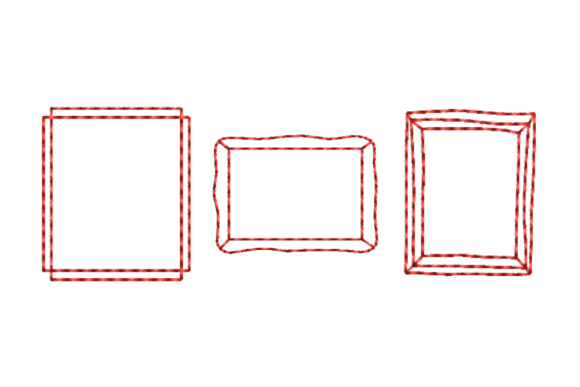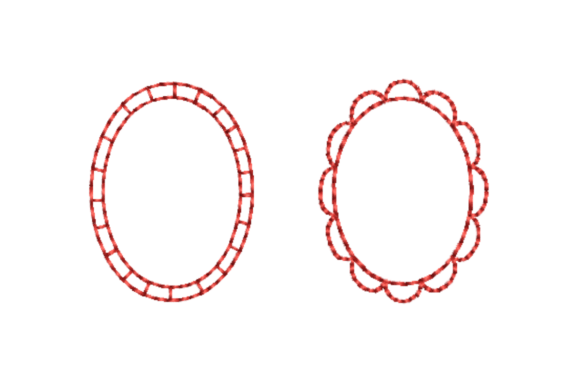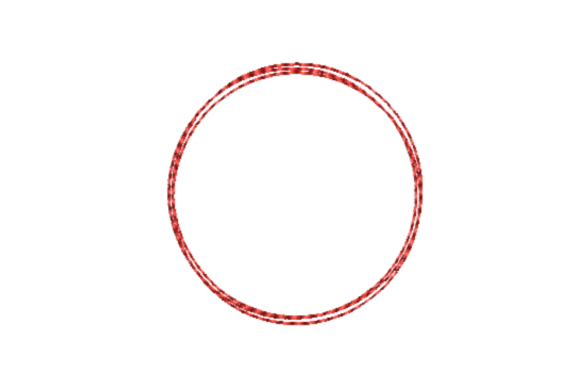
Circle Frame Outline Redwork
A Clean Circle That Actually Works—Not Just Looks Pretty
As someone who’s stitched hundreds of borders for client projects—from boutique baby onesies to Etsy best-selling tea towels—I opened Circle Frame Outline Redwork expecting simplicity. What I got was something more valuable: reliability. This isn’t a decorative flourish you’ll second-guess mid-hooping. It’s a quiet, confident circle—just one continuous running stitch outline in classic redwork style—that lands with intention. No fill, no satin stitch distractions, no fussy corners. Just a smooth, even loop that reads as elegant, not empty; intentional, not minimal for minimalism’s sake.
Where It Shines (and Where It Belongs)
Last week, I used Circle Frame Outline Redwork on a set of linen kitchen towels for a small shop launch. We centered it over a monogrammed name in soft black thread—no contrast overload, just quiet hierarchy. Customers responded immediately: “It feels like a signature,” one said. That’s the power of this design. It doesn’t shout. It frames. And because it’s a true outline—not a thick or pixelated shape—it scales cleanly from a 3-inch hoop on a child’s bib to a 5-inch version on a canvas tote bag.
I’ve also tested it on lightweight cotton sweatshirts (medium-weight stabilizer), structured denim patches (cutaway + tear-away combo), and even curved cap fronts (with careful hooping and basting). In every case, the single-line continuity held up—no skipped stitches, no distortion at the join point. That’s rare in redwork-style outlines, where thin lines can vanish on textured fabric or stretch under tension. Circle Frame Outline Redwork avoids that trap by keeping its line weight consistent and generous enough for clarity, but fine enough to feel delicate.
Real Talk: When to Pause Before Pressing Start
This design earns trust—but it’s not magic. On ultra-thin voile or slubbed linen, I recommend testing first with your exact thread and stabilizer stack. Redwork relies on contrast, so if you’re stitching on dark fabric, verify that your chosen red (or substitute thread color) reads clearly—not muddy, not washed out. And while the circle is forgiving on flat surfaces, avoid using it near deep seams, elastic hems, or heavily gathered areas without re-hooping and re-basting. The outline won’t warp, but fabric movement can pull the registration just enough to soften the clean edge.
Also worth noting: because it’s a pure outline, Circle Frame Outline Redwork doesn’t mask imperfect lettering or uneven placement. If you’re adding names or dates inside the frame, keep fonts legible at scale—and leave breathing room. I once saw it paired with tiny script inside a 2.5-inch hoop; the result felt cramped, not charming. Let the circle breathe. Its strength is spaciousness.
Why It Builds Customer Trust—Not Just Visual Appeal
Handmade buyers don’t just buy embroidery—they buy intention. A clean, balanced frame signals care. When I used Circle Frame Outline Redwork on personalized baby blankets, parents consistently commented on how “thoughtful” and “grown-up” the detail felt—even though it’s technically simple. That perception lifts perceived value. It tells customers: *This wasn’t rushed. This was chosen.*
For Etsy sellers and craft fair vendors, that subtle professionalism compounds. A well-placed circle frame on a patch, apron, or pillow cover makes your whole booth feel cohesive—even if your other designs vary widely. It’s a quiet anchor. And because it’s neutral in theme (no florals, no holidays, no trends), it supports brand consistency across seasons and product lines.
Designer Notes You’ll Actually Use
- Always test on scrap fabric first—especially if pairing with custom lettering or using non-standard thread colors.
- Check stitch density visually, not just in software. A true redwork outline should look fluid, not jagged or overly segmented.
- Confirm hoop size compatibility before batching production. This design fits comfortably in 4x4 hoops, but double-check your file’s actual dimensions.
- Review small details at 200% zoom: Does the circle close cleanly? Is the start/stop point discreet? (Ours was—no visible jump or knot.)
- Test in black-and-white mockups before finalizing listings. Contrast matters more than color in thumbnail views.
- Compare light vs. dark backgrounds using real fabric swatches—not just screen previews.
- Use appropriate stabilizer: medium-weight cutaway for knits, tear-away for stable wovens, and a light fusible for lightweight linens.
- Verify licensing terms before selling finished items or bundling the digital embroidery file in kits—especially for commercial embroidery or digital product resale.
Final Thought: Simplicity With Substance
Circle Frame Outline Redwork isn’t flashy—but then, the best borders rarely are. It’s the kind of machine embroidery design that disappears into the work while elevating it. It belongs on a handmade product where quiet confidence matters more than cluttered charm. Whether you’re building a craft business, launching an Etsy shop, or stitching holiday gifts for people who notice details, this circle doesn’t distract. It dignifies. And in embroidery—where every stitch carries weight—that’s the highest compliment.