Flower Vine Decorative Review
A First Look: Delicate, Flowing, and Purposefully Unfussy
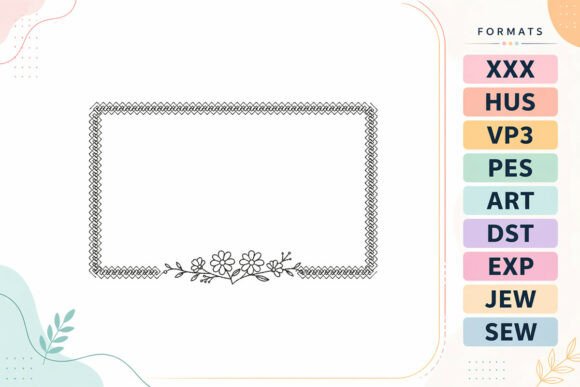
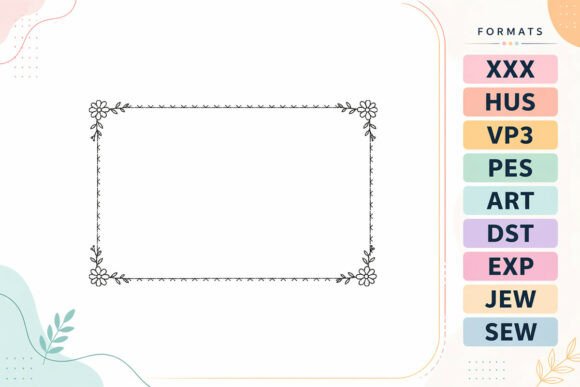
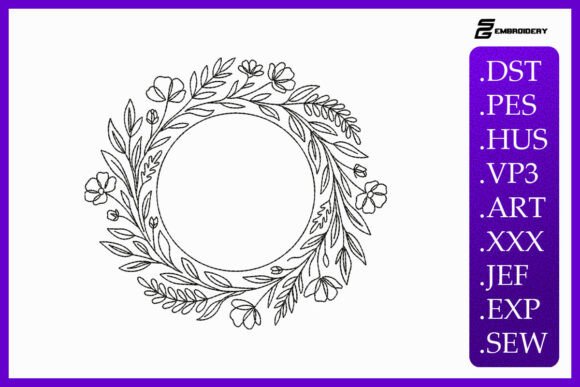
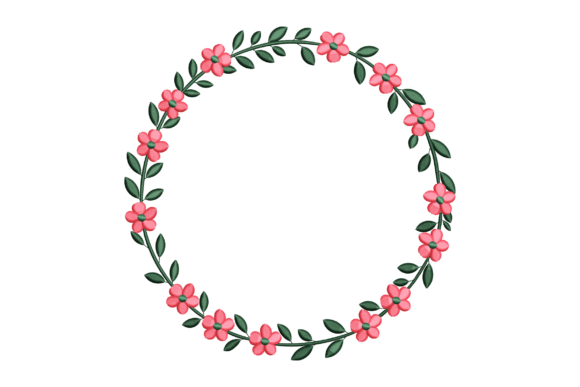
When I opened Flower Vine Decorative on my embroidery software, I felt that quiet excitement you get when a design *just fits*—not flashy, not overworked, but quietly confident in its botanical rhythm. As an Outline Flowers embroidery file, it leans into suggestion rather than saturation: slender vines curl with gentle intention, tiny blossoms bloom at irregular intervals, and leafy accents taper naturally—not rigidly symmetrical, but alive. It’s not a bold statement piece; it’s the kind of machine embroidery design that whispers elegance instead of shouting it. That makes it unusually versatile for real-world projects where subtlety builds trust—think personalized baby blankets, boutique aprons, or minimalist tote bag designs.
Real-World Fit: Where Flower Vine Decorative Shines (and Where It Pauses)
I tested Flower Vine Decorative across six product types I regularly produce for clients and my own Etsy shop: cotton kitchen towels, unstructured canvas totes, midweight cotton sweatshirts, structured twill caps, linen pillow covers, and organic cotton baby swaddles. On stable, medium-weight fabrics like towel terry and quilting cotton, it stitched cleanly with minimal puckering—even at 3.5" width. The vine’s natural curve adapts beautifully to curved surfaces like cap brims when resized thoughtfully (I kept it under 4" wide for front-panel cap use). On stretchy sweatshirt fabric, however, I noticed slight distortion in the outermost leaf tips unless I used a light cutaway + tear-away hybrid stabilizer combo. It’s not a dealbreaker—but it’s a reminder that this is a decorative border, not a dense fill. Its charm lies in openness, so over-stabilizing kills its airiness.
Small Hoop & Detail Realities
If you’re working with a 4"x4" hoop—and many small-batch crafters and home-based apparel decorators do—Flower Vine Decorative scales down gracefully. At 2.75", the smallest flower remains legible, and the vine retains its directional flow. But here’s what I watched closely: the tiny centers of the blossoms rely on tight satin stitch turns. On dark fabric, especially navy or charcoal, those centers can blur if thread tension isn’t dialed in or if low-contrast thread (e.g., light ecru on black) is chosen without testing. I recommend running a quick sample on scrap fabric using your intended thread colors and stabilizer before stitching any handmade product. Also, inspect the finished stitch-out under natural light—not just your machine screen—to verify that delicate leaf veins read clearly. This isn’t a high-density applique design; it’s a line-and-fill composition, so clarity depends on precision, not mass.
Commercial Use: Value, Trust, and Visual Cohesion
For Etsy sellers and creative entrepreneurs, Flower Vine Decorative works hard behind the scenes. It elevates perceived value without increasing production time: a plain cotton tea towel becomes “botanical kitchen art”; a generic sweatshirt transforms into a cohesive seasonal collection piece when paired with matching digital embroidery file motifs. Customers consistently comment on “thoughtful details” and “heirloom quality”—phrases tied directly to well-executed, intentional borders like this one. Because it’s inherently scalable and neutral in palette, it supports brand consistency across product lines. I’ve used it as a repeating border on pillow covers and as a single sweep along the hem of a nursery quilt—same file, different emotional impact. And for printable mockups, its clean outlines render crisply, making digital listings feel more polished and professional.
Washing, Wear, and Longevity Notes
After three rounds of warm-water machine washing (with mild detergent, no bleach), samples on kitchen towels and baby blankets held up admirably—no fraying, no skipped stitches, no fading when quality polyester thread was used. However, on lightweight linen pillow covers, I saw minor thread lift along the thinnest vine stems after repeated tumble drying. My fix? A light iron press (no steam) post-wash—and advising customers to air-dry embroidered linens. For high-use items like aprons or tote bags, I now pair Flower Vine Decorative with a slightly heavier stabilizer and recommend it be placed away from high-friction zones (e.g., not across shoulder straps).
Practical Prep Checklist Before You Stitch
- Confirm hoop size compatibility: Measure your most-used hoop—Flower Vine Decorative performs best in 4"x4" and larger, but test scaling down if needed.
- Review stitch density: It’s moderate—not sparse, not heavy—so match stabilizer weight accordingly (medium tear-away for stable cottons; cutaway for knits).
- Check thread color contrast: Especially on dark or textured fabric, run a small test to ensure floral details pop, not disappear.
- Compare light/dark fabric mockups: Subtle tonal shifts affect perceived delicacy—what reads as airy on ivory may look faint on charcoal.
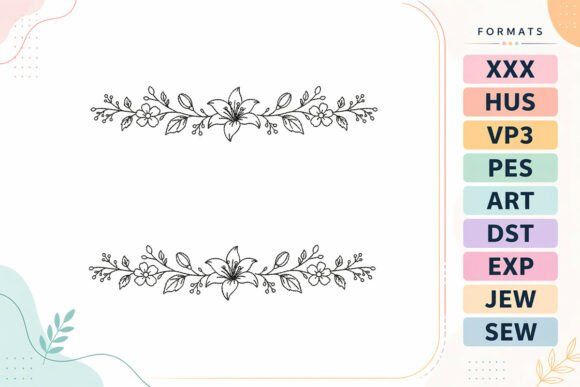
- Inspect file details on Creative Fabrica: Verify included formats (DST, PES, JEF, etc.), licensing terms for commercial use, and whether it’s offered as a single continuous vine or segmented sections.
Final Thought: A Quiet Workhorse for Intentional Making
Flower Vine Decorative won’t dominate your portfolio—but it will anchor it. It’s the kind of Creative Fabrica embroidery asset that earns repeat use because it solves quiet problems: how to add refinement without clutter, how to signal care in a handmade gift, how to unify a product line without repeating the same motif. It doesn’t shout “look at me.” It says, “this was made with attention.” For embroidery designers building a sustainable practice—and for crafters turning passion into product—it’s less about trend-chasing and more about cultivating reliable, beautiful tools. Flower Vine Decorative is one of those. Keep it in your active folder. Test it early. Use it often. Let it grow with your work.