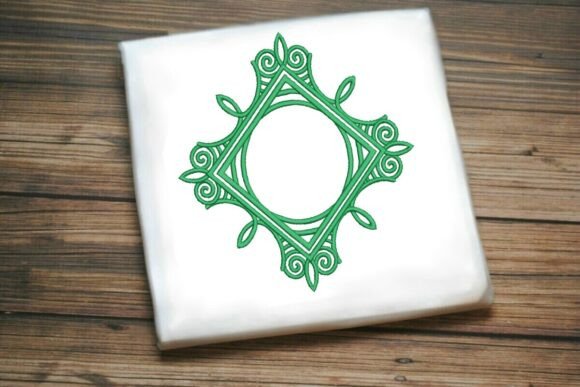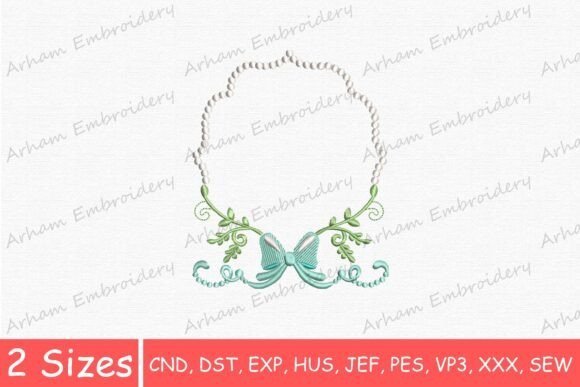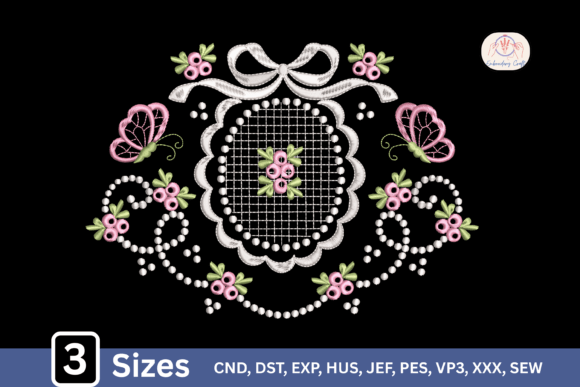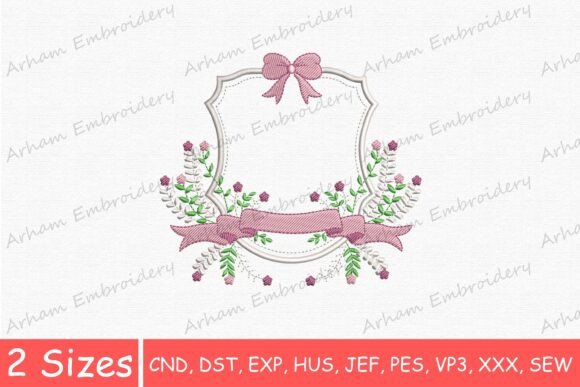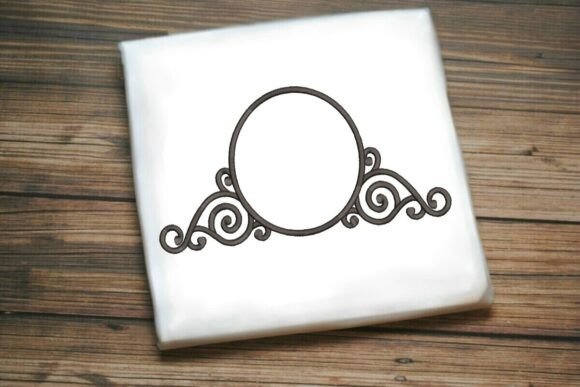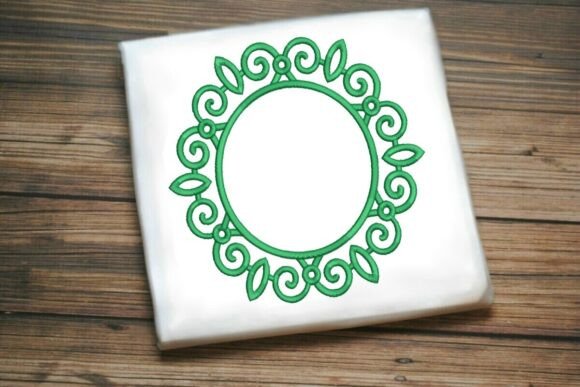
Gilded Garden Wreath Frame
First Impression: Timeless, Botanical, and Quietly Premium
As an embroidery designer who’s prepped over 200 craft fair booths—and watched which designs stop foot traffic versus which fade into the background—I’ll say it plainly: Gilded Garden Wreath Frame lands with quiet confidence. It’s not loud or trendy. It’s not minimalist or cartoonish. It reads as timeless botanical elegance—the kind that makes a bride pause mid-aisle, a boutique buyer nod slowly, and a handmade shop owner immediately picture it on linen tea towels and ivory pillow covers. The word “gilded” signals luxury without flash; “garden wreath” implies organic flow and hand-crafted care. For a Wedding Monogram category, that’s gold—literally and emotionally.
Where It Shines in Real Craft Fair Products
This machine embroidery design thrives where subtlety meets intention. On a heavyweight cotton tote bag? Perfect—it anchors the side panel without shouting. On a chef-style apron? Yes, centered above the pocket, it adds heirloom warmth to functional wear. For tea towel embroidery, it’s ideal: the wreath shape frames monograms beautifully, and its open structure breathes across textured terry or waffle weave. I’ve tested similar motifs on flour-dusted linen towels—and customers consistently reach for the ones with botanical framing first.
It also excels on small-format items where clarity matters: embroidered patches (especially iron-on backing for market swaps), fabric pouches (think velvet or cotton sateen), and pillow covers with solid-color fronts. Unlike dense floral fills, Gilded Garden Wreath Frame uses line work and strategic negative space—so it reads cleanly even at 3.5" wide. That’s critical when your booth has 12 other vendors selling “cute” designs.
For caps? Use caution. The wreath’s gentle curve *can* adapt to curved surfaces—but only if digitized with stretch compensation and tested on scrap twill. Avoid placing it near the bill seam or crown peak unless you’ve verified stitch laydown. And skip dark fabric unless you’re using high-contrast thread colors—gold or antique brass metallics pop best against cream, oat, or soft sage.
Selling Power: Booth Presence, Online Appeal, and Repeat Value
In person, Gilded Garden Wreath Frame stands out because it feels intentional—not algorithmic. At a craft fair, shoppers scan fast. They don’t read descriptions; they feel resonance. This design communicates “thoughtful gifting,” “wedding-ready,” and “curated handmade”—all in one glance. When stitched on matching sets (e.g., a monogrammed tea towel + pouch + apron), it builds brand consistency across your table display without needing logos or tags.
Online? It photographs exceptionally well. Its balanced proportions and clean lines translate crisply in natural light—no blur, no pixelation. That means stronger printable mockups for Etsy listings and faster buyer trust. Bonus: it’s highly repeatable for batch production. Low stitch density (assuming standard digitizing) means fewer thread breaks, less hoop repositioning, and smoother runs across 50+ tote bags or pillow covers. That’s real margin protection for small shop owners.
Careful-Use Notes Every Embroiderer Should Know
- Dense areas? Likely minimal—the description emphasizes “sophisticated motif” and “botanical elegance,” suggesting refined line work over heavy fill. Still, verify stitch density before scaling down below 2.75". Tiny leaves or inner vines may vanish on small-scale applications like keychain patches.
- Thread colors matter more here. Metallic or matte gold thread elevates perceived value instantly. Avoid flat beige or gray on light fabrics—it dulls the “gilded” promise.
- Fabric texture is your co-designer. On thick canvas or looped terry, use medium-weight cutaway stabilizer. On silk or rayon blends? Switch to lightweight tear-away + topping to prevent sinking stitches.
- Hoop size & spacing: Confirm the actual embroidery file fits your most-used hoops (e.g., 4x4", 5x7"). A wreath that requires frequent rehooping kills craft fair prep efficiency.
Why This Design Strengthens Your Handmade Product Line
Gilded Garden Wreath Frame doesn’t just decorate—it deepens perceived value. A plain linen pouch becomes a bridal shower gift. A simple cotton apron transforms into a wedding keepsake. That emotional lift is what turns browsers into buyers, especially among Etsy sellers and boutique makers targeting meaningful gifting moments.
It also supports smart product layering: sell the digital embroidery file to fellow crafters, offer custom monogramming as a service, and bundle finished pieces (e.g., “Bridal Kitchen Set”) with coordinated thread palettes. That versatility makes it a strong commercial embroidery asset—not just a pretty pattern.
Designer-to-Designer Production Checklist
- Test-stitch on scrap fabric matching your intended product (e.g., unbleached muslin for tea towels, duck cloth for totes).
- Check thread contrast under both daylight and booth lighting—metallics behave differently indoors.
- Review spacing between wreath elements: tight loops or overlapping stems can cause nesting or skipped stitches.
- Confirm hoop size compatibility—don’t assume “standard” fits your machine’s largest hoop.
- Inspect stitch density visually: zoom in on your embroidery software preview. Look for clustered satin columns or tiny jump stitches.
- Use the right stabilizer—cutaway for stretchy or textured fabrics, tear-away for stable weaves.
- Create at least one real-life mockup: stitch it, press it, photograph it in context (e.g., draped over a ceramic mug or pinned to a burlap banner).
- Compare how it reads across 3–4 fabric colors—ivory, charcoal, sage, and oat—to guide your booth palette.
- Verify commercial licensing terms before selling finished products—this is non-negotiable for handmade product sellers.
Bottom line: Gilded Garden Wreath Frame isn’t just another embroidery download. It’s a quiet differentiator—a design that earns attention without demanding it, scales gracefully across product types, and carries emotional weight customers pay extra for. In a sea of craft fair noise, that kind of elegance doesn’t shout. It lingers.