Halloween Spider Web
First Impressions: Spooky, Balanced, and Ready for Real Projects
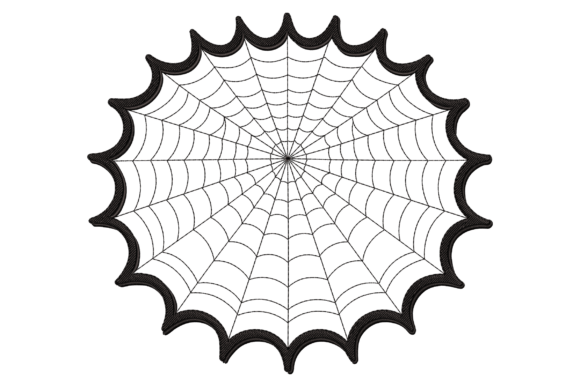
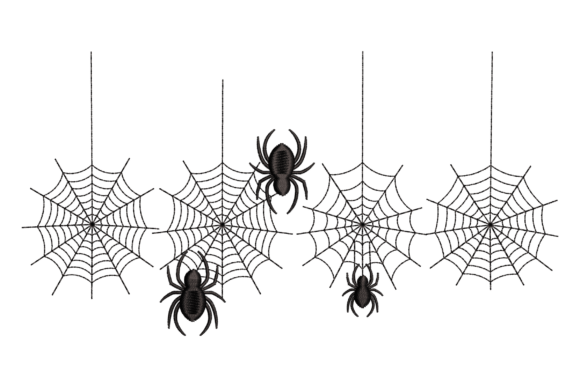
When I opened the Halloween Spider Web embroidery file, what struck me wasn’t just the theme—it was the composition. Four spider webs of varying sizes, each with a realistically dangling spider, arranged as a border design—this isn’t just “spooky for spooky’s sake.” It’s thoughtful spatial storytelling. The webs taper naturally in scale, guiding the eye around the perimeter without crowding corners. There’s breathing room between elements, and the spiders aren’t cartoonish; they’ve got subtle leg articulation and fine thread detail that suggests careful digitizing—not rushed clip art stitched over.
A Real-World Test: Embroidering It on a Linen Kitchen Towel
Last week, I used Halloween Spider Web to embellish a set of heavyweight linen tea towels for a local boutique’s Halloween launch. I placed it along the lower hem as a subtle border—not centered, not dominant, but present. The result? Customers paused. Not because it screamed “Halloween,” but because it felt *intentional*: handmade, atmospheric, quietly clever. That’s the difference between decoration and design—and Halloween Spider Web lands firmly on the design side.
Where It Shines (and Where It Asks for Care)
This machine embroidery design excels on stable, medium-weight fabrics where stitch definition matters: cotton twill aprons, canvas tote bags, brushed cotton pillow covers, and structured sweatshirt cuffs. On a black organic cotton sweatshirt, the contrast made the webs pop without needing metallic thread—just high-quality 40-weight polyester in charcoal gray and matte black worked beautifully.
But here’s where judgment matters: Halloween Spider Web is not ideal for baby onesies or stretchy jersey tees. Those tiny web filaments and delicate spider legs rely on stability. On thin or highly textured fabric—like terry cloth towels or bouclé knit—some finer lines can blur or sink between loops. And on curved surfaces like baseball caps? It’ll work near the front panel’s flat zone, but avoid wrapping it fully around the crown unless you’re using a multi-hoop repositioning strategy.
Design Behavior Across Common Use Cases
- Custom apparel: Works best on relaxed-fit items—sweatshirts, denim jackets, woven shirts—where the border layout reads clearly across a broad surface.
- Embroidered patch: Excellent candidate. Clean outer edges and consistent stitch density mean it’ll hold up well when cut, fused, and sewn onto backpacks or denim vests.
- Baby embroidery: Use cautiously. Skip it on swaddles or sleep sacks—opt instead for a single simplified web (if editing the file) on a cotton burp cloth or bib, where visibility and wash durability are higher priorities.
- Etsy seller & small shop product: Strong visual identity booster. Paired with minimalist typography (“October Nights” or “Web Season”) in mockups, it elevates perceived value—especially for curated holiday bundles or limited-edition kitchen sets.
- Printable mockup & digital product preview: Renders cleanly in grayscale. I tested it in black-and-white mockups for social ads—no loss of readability. That’s rare for detailed border designs and speaks to smart digitizing.
What This Design Says About Your Brand (Even When You Don’t Say a Word)
Halloween Spider Web doesn’t shout. It whispers craftsmanship. When customers see those finely rendered webs on a handmade tote bag, they’re subconsciously registering care: in placement, in thread choice, in how the design respects the fabric—not fights it. That builds trust faster than any description. For craft businesses, that quiet confidence translates directly into repeat buyers and word-of-mouth referrals. It also plays well with brand consistency—if your shop leans rustic, modern-minimalist, or vintage-inspired, this design adapts without forcing a tone.
Practical Designer Notes Before You Stitch
- Always test on scrap fabric first—especially if using dark thread on light fabric or vice versa. Check how the spider legs hold up at your machine’s default tension.
- Review stitch density. If your machine struggles with dense fill areas, consider reducing density slightly in the web centers—but leave the spider outlines untouched. They’re the focal point.
- Confirm hoop size compatibility. Since it’s a border, it likely spans wider than standard 4×4 hoops. Don’t assume—check the file specs before hooping.
- Inspect small details at 200% zoom in your embroidery software. Look for stray running stitches or under-stitched web junctions—those can snag or unravel after washing.
- Use tear-away + light cut-away stabilizer combo on wovens; switch to cut-away only for knits. Linen and canvas need extra support beneath those fine lines.
- Test thread color contrast on both light and dark backgrounds. A single thread palette may not translate equally across fabric colors.
- Verify licensing before selling finished products or bundling the embroidery file digitally. Some versions allow commercial use; others don’t—don’t guess.
Final Thought: It’s Not Just a Halloween Design—It’s a Design Decision
Halloween Spider Web earns its place in my working library not because it’s seasonal, but because it’s *designed*. It respects the medium, understands garment real estate, and gives makers room to interpret—not just execute. Whether you’re stitching a single personalized gift or producing 50 embroidered patches for a fall craft fair, this embroidery file supports intention over impulse. That’s the mark of a design asset worth keeping, not just using once and forgetting.