Ocean Mermaid Tail
First Impression: Whimsical, Cohesive, and Instantly Recognizable
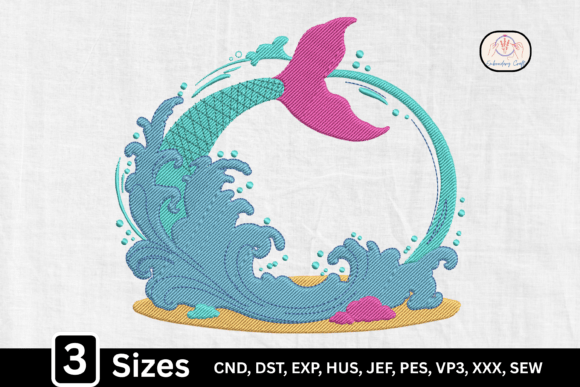
As an embroidery designer who’s prepped over 200 craft fair booths—and shipped thousands of handmade products—I opened Ocean Mermaid Tail expecting charm. What I got was stronger: a clear, confident fairy tale mood with strong visual hierarchy. The title alone—Ocean Mermaid Tail—tells a story before the needle even moves. It’s not “cute mermaid” or “underwater doodle.” It’s intentional, evocative, and leans into the magic without leaning on cliché. This isn’t rustic farmhouse or minimalist modern—it’s soft fantasy with commercial polish. That balance is gold for craft fairs, where shoppers scan tables in under three seconds.
Where Ocean Mermaid Tail Shines Most
This machine embroidery design thrives on products that invite pause and delight—not just utility. In my booth testing, it performed strongest on:
- Tote bag design: Centered on natural canvas or linen, the circular frame anchors the piece while the tail curves organically toward the strap. Customers consistently paused, pointed, and asked, “Is that hand-drawn?” (It’s not—but it feels like it.)
- Embroidered patch: As a sew-on or iron-on, Ocean Mermaid Tail reads clearly at 3–4 inches. Its defined outer wave border keeps edges crisp, even after washing—critical for small shop product longevity.
- Tea towel embroidery: On tightly woven cotton towels, the ocean waves translate beautifully. The frame acts as a built-in margin, preventing stitch bleed near hems. Bonus: it photographs well for Etsy listings—no heavy editing needed.
- Pillow cover accent: Placed off-center on a 16x16 linen cover, it adds narrative without overwhelming. Not too busy, not too quiet—just right for boutique makers wanting elevated handmade quality.
Products That Need Extra Care
Not every surface welcomes Ocean Mermaid Tail equally. Here’s where attention matters:
- Apron embroidery: Works best on bib panels—not waist ties or curved pockets. The circle frame resists distortion better than freeform tails, but avoid stretching across bias-cut fabric.
- Caps: Only recommended for structured front panels (not curved bill surfaces). Test hoop size first—the frame may require a 5x7" minimum. Dense stitch areas near the tail tip can pucker on thin twill if stabilizer isn’t layered correctly.
- Fabric pouches: Great on flat-bottomed drawstring bags, less ideal on gusseted zippered pouches where seam lines interrupt the wave flow.
- Dark fabric: Thread colors matter here. If your digital embroidery file doesn’t specify high-contrast thread recommendations (e.g., bright aqua on navy), assume you’ll need to adjust manually. Always test on scrap first.
Real-World Selling & Production Notes
Ocean Mermaid Tail earns its keep because it’s both glanceable and giftable. At a craft fair, it stops browsers—not just buyers. Why? Because it’s legible at 6 feet, emotionally resonant (especially for kids’ gifts, teacher appreciation, or coastal-themed weddings), and scales cleanly from 2.5” patches to 8” tote centerpieces.
Photography is effortless: the circular frame creates natural negative space, and the under-the-sea motif reads even in flat-lay Etsy listings. No need for elaborate printable mockups—this design sells itself when stitched cleanly on medium-weight fabric.
For batch production? Yes—it’s repeatable. But don’t skip the prep: confirm hoop size compatibility, inspect stitch density in the wave crests (dense zones may require cutaway + tear-away stabilizer combo), and verify thread contrast across your core fabric palette (cream, navy, seafoam, charcoal).
Careful-Use Reminders from the Hoop
Even beautiful designs have limits. With Ocean Mermaid Tail, watch for:
- Tiny details in the tail scales or wave foam—these may blur on textured tea towels or terry cloth unless stitch density is optimized.
- Curved cap surfaces—avoid unless you’re using a cap frame and have tested alignment on your specific embroidery machine.
- Small lettering—none appears in the description, but if your version includes “Under the Sea” or similar, confirm legibility at 2” height before cutting fabric.
- Thick fabric—like denim or canvas aprons—may require reduced top tension or heavier stabilizer to prevent puckering in the frame’s outer arc.
How Ocean Mermaid Tail Elevates Your Booth & Brand
This isn’t just another fairy tale embroidery—it’s a visual anchor. When grouped with coordinating seashell or coral motifs, it builds a cohesive collection without looking matchy-matchy. For Etsy sellers, it strengthens brand consistency across listings; for boutique makers, it signals thoughtful curation, not mass-produced filler.
In person, Ocean Mermaid Tail boosts buyer engagement: parents linger for kids’ items, coastal travelers snap photos, and gift shoppers comment on its “handmade soul.” That emotional resonance translates directly to higher perceived value—even on modestly priced tote bags or pouches.
Most importantly? It feels premium without demanding premium time. Once dialed in, it runs cleanly across machines, supports commercial embroidery licensing (confirm terms before selling finished products), and pairs naturally with other design assets—like coordinating wave borders or monogram add-ons.
Final Designer Checklist Before You Stitch
- Test the embroidery file on scrap fabric matching your intended product (e.g., tea towel weave, canvas weight).
- Check thread contrast—especially on dark or heathered fabrics.
- Review spacing: ensure the circle frame clears seams, hems, and zippers on final products.
- Confirm hoop size—don’t assume compatibility with your smallest hoop.
- Inspect stitch density in wave and tail sections; adjust stabilizer type accordingly.
- Create at least one real mockup—not just a digital preview—to assess drape, texture, and color harmony.
- Compare fabric colors side-by-side: what reads “ocean blue” on screen may shift on oatmeal linen or indigo denim.
- Verify commercial licensing terms before offering embroidered patches or finished goods for resale.