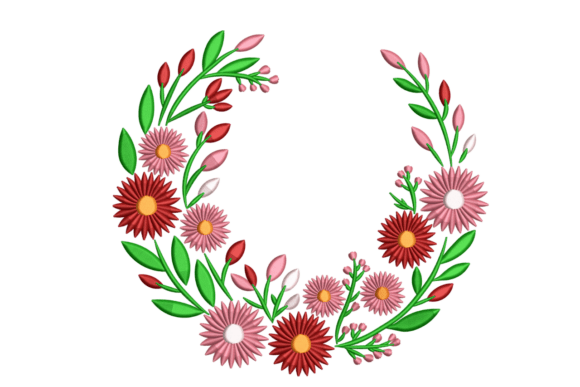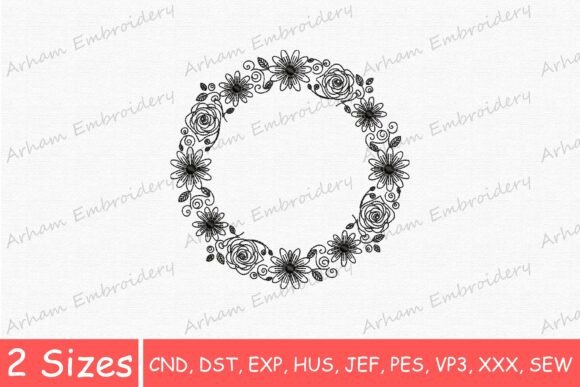
Rose Flower Circle Wreath
First Impressions: Timeless, Tender, and Thoughtfully Composed
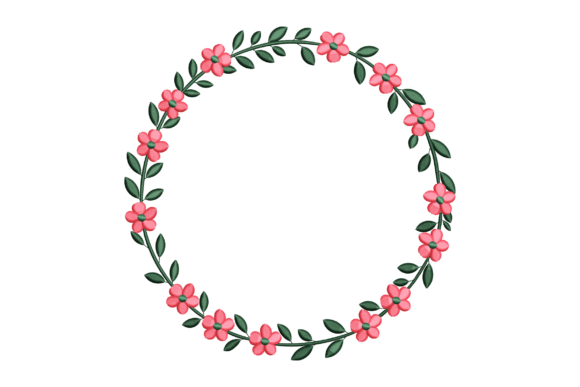
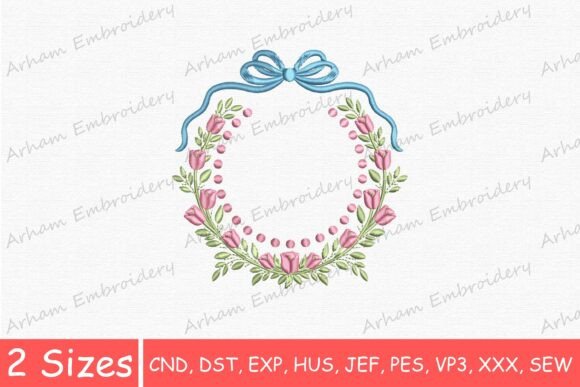
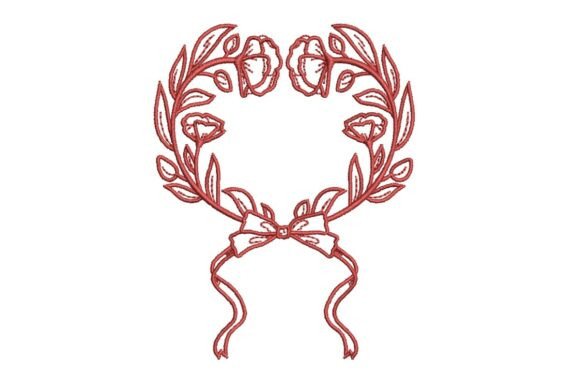
As an embroidery designer who’s tested hundreds of floral motifs for personalized gift shops and Etsy sellers, the Rose Flower Circle Wreath immediately stands out—not with flash, but with quiet confidence. It feels like a hand-drawn sketch translated into thread: soft, balanced, and full of gentle movement. The roses aren’t overly botanical or stiff—they’re romantic without being fussy, classic without feeling dated. There’s a subtle asymmetry in the petal placement that gives it handmade warmth, not digital rigidity. For customers seeking emotional resonance—new parents choosing a baby blanket, couples selecting a wedding keepsake, or grandparents gifting a nursery pillow—this design whispers “care” before a single stitch is made.
Where This Wreath Truly Blooms: Real-World Personalized Uses
The circular format of the Rose Flower Circle Wreath makes it unusually versatile across product types. On a folded kitchen towel? It anchors the top corner with quiet elegance—ideal for bridal shower gifts or housewarming presents. Stitched onto a linen pillow cover? It becomes a focal point that invites touch and conversation. For baby embroidery, center it on a muslin swaddle or organic cotton blanket—its rounded shape feels protective, nurturing, and inherently soothing. Wedding gift designers love how it frames monogram initials or dates when placed just below the neckline of a custom tote bag or embroidered apron.
Etsy sellers and small shop owners will appreciate how well it photographs: the circular symmetry creates natural negative space around it, making product mockups clean and scroll-stopping. As a digital embroidery file, it also scales beautifully—whether stitched at 3.5" for a onesie pocket or enlarged to 6" for a throw pillow front. It’s equally at home in a craft fair booth (think embroidered tea towels bundled with local honey) or as part of a curated nursery decor collection. And because it’s rooted in the Floral Wreaths category—not seasonal or trend-dependent—it sells year after year, not just during spring or wedding season.
Use With Intention: Where to Place—and Where to Pause
Like any thoughtful machine embroidery design, the Rose Flower Circle Wreath shines brightest when matched to the right fabric and function. Its delicate petal outlines and fine stem details mean it performs best on stable, medium-weight fabrics: crisp cotton poplin for pillow covers, smooth terry cloth for embroidered towels, and tightly woven linen for aprons or totes. Avoid using it on highly textured surfaces (like bouclé or heavy waffle weave) where detail may blur—or on stretchy baby clothes, where tension shifts can distort the wreath’s symmetry.
Be especially mindful on dark fabric: test thread colors carefully. Light pinks or creams may disappear unless paired with high-contrast underlay or metallic accents. On thick towels or quilted blankets, increase stabilizer support—tear-away alone won’t hold the stitch density steady. And never skip testing on scrap fabric first: check how the inner petals read after stitching, whether the circle remains perfectly round under hoop pressure, and how cleanly the design trims around tight curves.
Why This Design Builds Trust—and Drives Sales
In the world of personalized gift products, perceived value isn’t just about materials—it’s about emotional clarity. When a customer sees the Rose Flower Circle Wreath on your website or social preview, they instantly understand tone: refined, heartfelt, unhurried. That impression translates directly into buyer confidence. Handmade product buyers associate this kind of floral balance with craftsmanship—not mass production. Wedding gift shoppers trust it for heirloom quality. Baby embroidery clients feel reassured it’s gentle, non-clinical, and full of intention.
For Etsy sellers and digital product sellers, this design also supports strong storytelling in listings: pair it with phrases like “stitched with care,” “designed for keepsakes,” or “a circle of love”—language that aligns with how real people talk about meaningful gifts. And because it’s a standalone motif (no clashing patterns or busy backgrounds), it integrates seamlessly into printable mockups, allowing you to show multiple product applications fast—towel, pillow, blanket, tote—all from one embroidery file.
Practical Embroidery Notes Every Maker Should Confirm
- Always test first: Run a sample on scrap fabric matching your final product’s weight and texture—even if you’ve used this design before.
- Check thread color contrast: Especially on light or dark backgrounds. A soft rose thread may vanish on blush linen; try ivory or heather gray for definition.
- Verify hoop size compatibility: Ensure your machine’s largest hoop comfortably fits the design at your intended scale—no last-minute resizing mid-project.
- Review stitch density: High-density fills look lush on stable fabric but can cause puckering on knits or loosely woven cotton. Adjust underlay or reduce density if needed.
- Match stabilizer to fabric: Use cut-away for knits, tear-away for stable wovens, and heavy-duty cut-away for thick towels or quilted layers.
- Compare light/dark fabric mockups: What reads beautifully on white may need bolder thread or outline stitches on navy or charcoal.
- Inspect small details post-stitch: Look closely at petal tips and leaf junctions—trim stray threads gently to preserve delicacy.
- Confirm commercial licensing: If selling finished products (not just the embroidery file), ensure your license permits commercial embroidery use—especially for baby or wedding items sold at scale.
A Final Thought for Small Business Makers
The Rose Flower Circle Wreath isn’t just another floral embroidery file—it’s a quiet invitation to slow down, choose meaning over mass, and build a personalized gift business rooted in authenticity. Whether you're stitching baby embroidery for a local boutique, prepping wedding gift bundles for Etsy, or designing custom aprons for a chef-owned café, this wreath carries weight without heaviness. It says “I chose this for you,” not “I ran this through a machine.” And in today’s handmade economy, that distinction is everything.