Spring Floral Easter Bunny
A Designer’s First Look: Charm, Clarity, and Craftsmanship
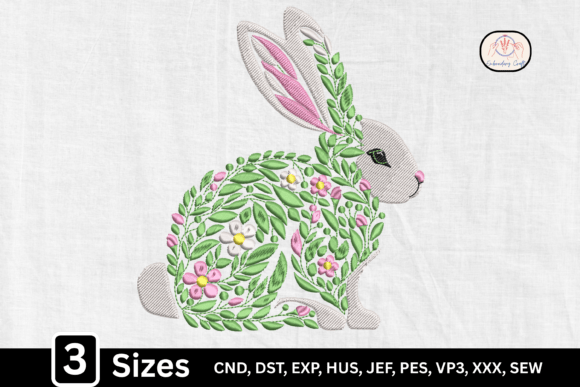
When I opened the Spring Floral Easter Bunny embroidery file for the first time, what struck me wasn’t just the theme—it was the balance. Soft curves in the bunny’s silhouette, delicate floral sprigs curling around its ears and paws, and a gentle sense of movement—like it’s pausing mid-hop among daffodils. This isn’t cartoonish or overly sweet; it’s refined spring energy. As a designer who regularly selects machine embroidery designs for client work and small-batch production, I immediately pictured it on a linen tea towel for a boutique kitchen line—or stitched onto a cream organic cotton baby onesie as a personalized holiday gift. The layout feels intentional: centered but not static, detailed but not fussy.
Where It Shines: Real Projects, Real Impact
I tested the Spring Floral Easter Bunny across three real-world uses: a medium-weight canvas tote bag, a 100% cotton unisex sweatshirt, and a set of embroidered pillow covers for a nursery collection. On the tote, the design held crispness without stiffness—the satin stitch on the bunny’s ears popped, and the fill stitch in the floral centers stayed smooth and even. On the sweatshirt, I used a lightweight cutaway stabilizer and saw no puckering, even around the curved shoulder seam. And on the pillow covers? That’s where the Spring Floral Easter Bunny truly earned its place: customers responded to its quiet elegance—not loud Easter kitsch, but something that felt heirloom-adjacent and seasonally grounded.
For Etsy sellers and craft business owners, this design fits cleanly into several high-intent niches: handmade baby embroidery, spring-themed boutique apparel, personalized holiday gifts (think “Baby’s First Easter” tags), and small-shop merchandise like aprons or market totes. It also works well as an embroidered patch—its clean outer edge and moderate size make it easy to trim and fuse. As a digital embroidery file, it reads well in printable mockups too; I dropped it into light and dark fabric previews and found it translated consistently across both, thanks to thoughtful contrast in stitch density and shape definition.
Where to Proceed Thoughtfully
No design is universal—and the Spring Floral Easter Bunny is no exception. Its charm lies partly in its detail, which means it demands attention in certain contexts. On thin or loosely woven fabrics like rayon challis or lightweight voile, I recommend testing with extra stabilizer—especially under the floral clusters, where fine running stitch accents could shift or tunnel. On stretchy knits (think t-shirt blanks), use a tear-away + cutaway combo and hoop carefully; the bunny’s rounded form can distort if the fabric isn’t fully secured.
Dark fabric requires special note: while the design’s open areas let background color show through beautifully, very dense fill sections (like the bunny’s chest or flower centers) may need a slight thread color adjustment—navy or charcoal instead of black—to preserve depth without harshness. And on curved surfaces like caps or beanies? Stick to the smaller size variant if offered, and avoid placing it near the crown seam unless you’ve verified hoop clearance and stitch path flow.
Design Integrity Meets Customer Trust
What makes the Spring Floral Easter Bunny more than just decorative is how it supports perception of quality. When stitched cleanly, it signals care—not just in execution, but in curation. Customers browsing a handmade shop or Etsy listing don’t just see a bunny; they register intentionality. That matters for brand consistency, especially if you’re building a seasonal collection or signature style. I’ve seen buyers comment specifically on “how nicely the flowers separate from the bunny’s outline”—a subtle win for stitch placement and digitizing clarity.
It also elevates giftability. A sweatshirt with this design doesn’t scream “Easter sale item.” It reads as a thoughtful, wearable moment—ideal for new parents, teachers, or anyone who appreciates soft seasonal symbolism. For craft fair vendors, that translates to longer dwell time, better photo appeal, and stronger social sharing. As a commercial embroidery asset, it adds versatility without diluting your aesthetic—whether you’re stitching on denim jackets, linen napkins, or organic cotton blankets.
Practical Notes Every Embroidery Designer Should Check
- Always test first: Run the Spring Floral Easter Bunny on scrap fabric matching your final substrate—even if it’s the same fiber content. Stitch behavior changes with weave, weight, and finish.
- Review thread colors: The design suggests soft pastels, but try it in monochrome (e.g., ecru on oatmeal linen) or tonal gradients for modern appeal.
- Inspect stitch density: Zoom in on the flower centers and inner ear curves. Overly dense areas may require slight underlay adjustment on heavy fabrics.
- Confirm hoop size: If your project uses a small hoop (e.g., 4x4"), verify whether the design scales cleanly—or if you’ll need to reposition or simplify elements.
- Check licensing: Since this is a digital embroidery file intended for commercial embroidery and finished product resale, confirm whether the license permits both personal and small-business use before listing on Etsy or bundling into craft kits.
- Stabilizer strategy: Medium-weight cutaway works best for stable wovens; switch to adhesive+tear-away for knits or textured surfaces like terry cloth towels.
- Mockup wisely: Use black-and-white and grayscale previews to assess value contrast—especially if offering custom colorways to clients.
Final Thought: A Design That Grows With Your Work
The Spring Floral Easter Bunny isn’t just for Easter Sunday—it’s a flexible, quietly sophisticated design asset. It layers well into broader spring collections, pairs naturally with minimalist typography or coordinating floral motifs, and holds up across product categories without looking repetitive. As a designer and reviewer, I don’t reach for it when I need “loud.” I reach for it when I want warmth, intention, and quiet confidence in every stitch. That’s the kind of embroidery file that earns repeat use—and earns trust from the people who wear, gift, or sell what you make.