Wavy Double Line Runner Design
A Sophisticated, Scalable Border for Small Business Branding
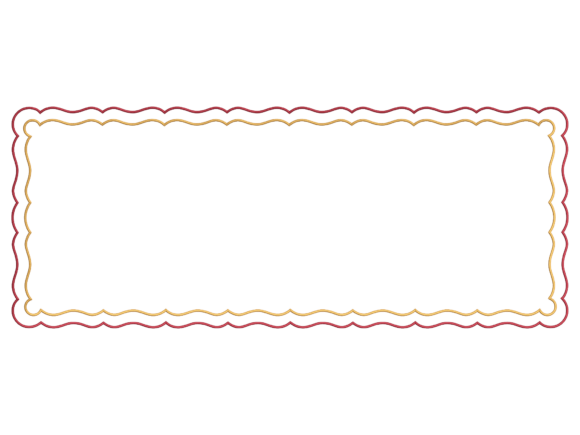
As an embroidery designer who’s developed hundreds of commercial designs for cafés, boutiques, bakeries, florists, and handmade brands, my first impression of the Wavy Double Line Runner Design is immediate: it reads as elegant, intentional, and quietly confident. The “Elegant Gold Crimson Scalloped Frame” descriptor tells me this isn’t a generic border—it’s a dual-line, interlocking scalloped motif with rhythm and restraint. It feels modern yet timeless, refined but not stiff—ideal for small businesses that want to signal quality without shouting. For a kitchen-focused brand (think artisanal spice labels, aprons, or café totes), it adds warmth and craft-conscious polish. It leans premium—not playful or rustic—but still approachable enough for a pet brand’s bandana trim or a florist’s gift wrap accent.
Real-World Performance Across Merchandise Types
The Wavy Double Line Runner Design excels where consistency and subtlety matter most. As an embroidered patch on a staff apron? It frames a logo beautifully without competing—its gentle wave guides the eye, not distracts. On a cap front, used as a clean lower-border accent beneath a wordmark, it adds dimension without overwhelming the curve. For tote bag design, it works exceptionally well along the bottom hem or as a side-runner—giving structure to otherwise minimalist canvas. As a sleeve detail on custom apparel, its repeat-friendly rhythm scales cleanly across varied arm widths. And for boutique merchandise—like branded tea towels or ceramic jar sleeves—the scalloped flow complements hand-drawn typography and natural textures.
It also strengthens brand identity through repetition: use it as a consistent runner on product packaging accents, event merch wristbands, or even printable mockups for client presentations. Because it’s a border—not a central icon—it supports visual consistency without locking you into one rigid layout. That flexibility is gold for Etsy sellers juggling multiple product lines or craft businesses updating seasonal collections.
Where to Use It Thoughtfully (and Where to Pause)
While versatile, the Wavy Double Line Runner Design demands attention in high-stakes applications. On very small patches (under 1.5 inches wide), the interlocking scallops may lose definition—test stitch-out clarity before committing to bulk production. Cap fronts with steep curvature can distort the wave pattern if digitized without proper underlay or stretch compensation—always verify the embroidery file handles fabric give. Avoid pairing it with tiny lettering directly inside the frame; the delicate lines need breathing room to read as intentional, not cluttered.
High stitch density is implied by “two delicate, interlocking scalloped lines”—so assess thread colors carefully. Gold and crimson are rich, but on dark uniforms (like navy chef jackets), contrast may soften unless metallic or high-sheen threads are used. On textured fabric—burlap, heavy linen, or terry cloth—stabilizer choice becomes critical: a cutaway + tear-away combo often preserves crispness better than tear-away alone. And because kitchen-adjacent items face frequent washing, confirm thread durability and lock-stitch integrity at both ends of the runner.
How It Shapes Customer Trust and Perceived Value
Small business customers don’t just buy a product—they buy confidence in your standards. A well-executed Wavy Double Line Runner Design signals care in execution: the even spacing, balanced wave amplitude, and clean line termination all whisper “this brand pays attention.” That perception lifts perceived value—whether it’s a $28 tote bag or a $14 branded coaster. For handmade products, it bridges the gap between artisanal charm and professional polish. It doesn’t scream “luxury,” but it *invites* trust—making customers more likely to engage, share, and return.
Visually, it reinforces cohesion across touchpoints: same runner on an apron, a cap, and a product label tells a unified story. That consistency builds recognition faster than standalone logos alone—especially for local businesses where repeat in-person interaction matters. And for digital-first sellers, including the Wavy Double Line Runner Design in printable mockups elevates presentation, helping buyers visualize how their brand translates into physical form.
Practical Embroidery Designer Notes for Commercial Use
Before sending the Wavy Double Line Runner Design to production, run these checks:
- Test in black and white first—to verify line weight balance and negative space clarity without color distraction.
- Confirm it holds detail at your smallest intended patch size—especially if using it for iron-on labels or garment tags.
- Review thread color contrast on your target fabric—gold on light linen? Crimson on charcoal denim? Simulate digitally, then stitch a sample.
- Inspect spacing between the two scalloped lines—too tight and it stitches poorly; too wide and it loses its “interlocking” elegance.
- Verify hoop size compatibility—a long runner may require multi-hooping or a larger frame; check the embroidery file specs.
- Test on real fabric with your standard stabilizer stack—kitchen linens vary wildly in weave and stretch.
- Create a physical mockup for client approval—a stitched swatch beats a screen preview every time.
- Compare it beside your other design assets—does it harmonize with your logo, typography, and secondary patterns?
- Confirm commercial licensing—since this is for small business merch, branded patches, and resale items, ensure the digital embroidery file permits commercial embroidery use.
Remember: the Wavy Double Line Runner Design isn’t just decoration—it’s a functional branding tool. When executed with intention, it elevates apron embroidery, refines cap embroidery, and gives tote bag design quiet authority. For any small business investing in custom apparel or kitchen-adjacent merchandise, it’s a subtle but strategic asset—elegant in motion, reliable in execution, and unmistakably professional in finish.